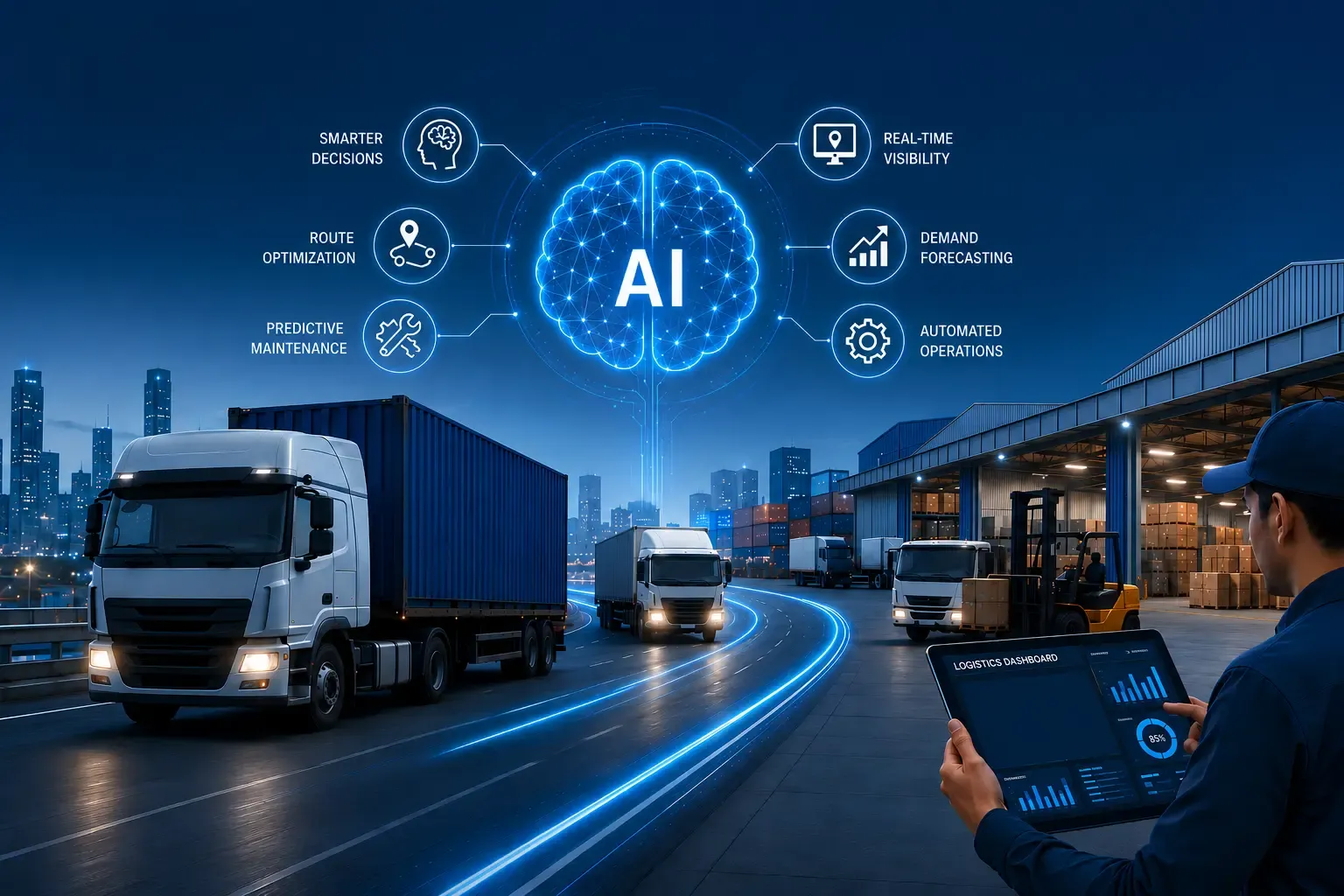
India's logistics sector is undergoing a major transformation. With rising customer expectations, increasing fuel costs, complex supply chains, and the rapid growth of e-commerce, logistics companies are under constant pressure to improve efficiency while reducing operational expenses.
This is where AI logistics solutions India are creating a significant impact. Artificial Intelligence (AI) is helping transporters, fleet owners, 3PL providers, freight brokers, and supply chain managers make smarter decisions, automate repetitive processes, and optimize logistics operations like never before.
From predictive analytics and route optimization to automated fleet management and real-time visibility, AI is becoming a critical component of modern logistics strategies. In this article, we'll explore how AI is reshaping the logistics landscape in India and why businesses should embrace this technological revolution.
Why AI Logistics Solutions India Are Gaining Momentum
India's logistics industry contributes significantly to the country's economy. However, challenges such as traffic congestion, fuel price fluctuations, driver shortages, and delivery delays continue to affect operational efficiency.
Traditional logistics management systems often rely heavily on manual decision-making. AI introduces data-driven intelligence that enables businesses to:
- Reduce transportation costs
- Improve delivery accuracy
- Optimize vehicle utilization
- Enhance customer experience
- Increase supply chain visibility
- Predict operational risks
As digital transformation accelerates, organizations are increasingly investing in AI logistics solutions India to gain a competitive advantage.
How Artificial Intelligence Works in Logistics
Artificial Intelligence uses advanced algorithms, data analytics, automation, and machine learning to analyze large volumes of logistics data and generate actionable insights.
AI systems continuously learn from:
- Vehicle movement data
- GPS tracking information
- Traffic conditions
- Fuel consumption records
- Customer demand patterns
- Warehouse operations
- Delivery performance metrics
This enables businesses to make proactive decisions rather than reacting to problems after they occur.
AI Transport Management: The Future of Fleet Operations
Real-Time Fleet Monitoring
Modern AI transport management platforms provide real-time visibility into vehicle locations, driver behavior, and shipment status.
Fleet managers can monitor:
- Vehicle routes
- Driver performance
- Fuel efficiency
- Maintenance schedules
- Delivery timelines
AI-powered dashboards help identify operational bottlenecks and recommend corrective actions instantly.
Predictive Maintenance
Unexpected vehicle breakdowns can lead to delayed deliveries and increased costs. AI systems analyze data from vehicle sensors to predict potential mechanical failures before they occur. This allows fleet operators to schedule maintenance proactively and minimize downtime.
Benefits include:
- Reduced repair expenses
- Improved vehicle lifespan
- Higher fleet availability
- Better customer satisfaction
Driver Performance Optimization
AI can evaluate driving patterns such as:
- Harsh braking
- Excessive idling
- Speed violations
- Fuel consumption habits
By identifying risky or inefficient driving behavior, transport companies can improve safety standards and reduce fuel costs.
Route Optimization Software India: Smarter Deliveries, Lower Costs
One of the most impactful applications of AI in logistics is route planning.
Intelligent Route Planning
Traditional route planning often fails to account for real-time variables such as traffic congestion, road closures, weather conditions, and delivery priorities. Modern route optimization software India uses AI algorithms to calculate the most efficient routes dynamically.
This helps businesses:
- Reduce fuel consumption
- Improve on-time deliveries
- Increase daily delivery capacity
- Lower transportation expenses
Dynamic Route Adjustments
AI systems continuously analyze live data and can instantly reroute vehicles when unexpected disruptions occur. For example, if a highway becomes congested due to an accident, the system can automatically suggest alternative routes to avoid delays.
Multi-Stop Delivery Optimization
For companies managing numerous deliveries daily, AI determines the most efficient sequence of stops. This reduces total travel distance and maximizes vehicle productivity.
Machine Learning Logistics India: Driving Smarter Supply Chains
Demand Forecasting
One of the biggest challenges in logistics is predicting future demand accurately. Machine learning logistics India solutions analyze historical sales data, seasonal trends, market conditions, and customer behavior to forecast demand more precisely.
Benefits include:
- Better inventory planning
- Reduced stockouts
- Lower storage costs
- Improved customer service
Capacity Planning
Machine learning algorithms help logistics companies anticipate transportation requirements in advance.
Businesses can:
- Allocate vehicles effectively
- Manage workforce requirements
- Optimize warehouse resources
- Avoid capacity shortages
Risk Prediction
AI can identify patterns that indicate potential supply chain disruptions. Examples include:
- Delivery delays
- Vehicle breakdowns
- Route bottlenecks
- Supplier issues
Early detection enables organizations to take preventive action and maintain operational continuity.
AI Solutions for Logistics Companies India: Key Applications
Automated Dispatch Management
AI-powered dispatch systems automatically assign shipments to the most suitable vehicles based on vehicle location, capacity availability, delivery deadlines, and driver schedules. This reduces manual intervention and improves dispatch efficiency.
Freight Matching
For freight brokers and logistics aggregators, AI helps match loads with available carriers quickly and accurately.
Advantages include:
- Faster load allocation
- Reduced empty miles
- Higher fleet utilization
- Improved profitability
Shipment Tracking and Visibility
Customers increasingly expect real-time shipment updates. AI-driven tracking platforms provide:
- Live shipment monitoring
- Accurate ETA predictions
- Delay notifications
- Automated customer communication
Enhanced transparency strengthens customer trust and satisfaction.
Warehouse Automation
AI is also transforming warehouse operations through:
- Inventory optimization
- Automated sorting
- Smart picking systems
- Space utilization analysis
These improvements help reduce operational costs and improve order fulfillment speed.
Benefits for Transporters and Fleet Owners
Reduced Operating Costs
AI identifies inefficiencies across transportation operations, helping businesses save on fuel expenses, maintenance costs, labour costs, and route planning inefficiencies.
Improved Asset Utilization
AI ensures vehicles and resources are utilized effectively, reducing idle time and maximizing productivity.
Better Decision-Making
With real-time analytics and predictive insights, logistics managers can make faster and more informed decisions.
Increased Revenue Opportunities
Improved efficiency allows businesses to handle more shipments with existing resources, leading to higher profitability.
Benefits for SME Shippers and Manufacturing Companies
Small and medium-sized businesses often face logistics challenges due to limited resources. AI-powered logistics platforms provide access to:
- Affordable transportation planning
- Accurate shipment tracking
- Improved delivery performance
- Better inventory management
As a result, SMEs can compete more effectively in today's fast-paced market.
Challenges in Implementing AI in Logistics
Despite its advantages, AI adoption comes with certain challenges.
Initial Investment Costs
Deploying AI technologies may require investments in software platforms, data infrastructure, training programs, and system integration.
Data Quality Issues
AI systems depend on accurate and reliable data. Poor data quality can limit effectiveness and produce inaccurate insights.
Workforce Adaptation
Employees must learn to work alongside AI-powered systems. Proper training and change management are essential for successful implementation.
Cybersecurity Concerns
As logistics operations become more digitized, organizations must prioritize data protection and cybersecurity measures.
Emerging Trends in AI Logistics Solutions India
Autonomous Transportation
Although still evolving, autonomous vehicles and self-driving technologies are expected to reshape freight transportation in the coming years.
AI-Powered Digital Twins
Digital twin technology creates virtual replicas of logistics networks, enabling businesses to simulate operations and test strategies before implementation.
Conversational AI and Chatbots
AI-powered customer support systems are improving communication by providing instant responses to shipment-related queries.
Hyper-Personalized Logistics Services
AI enables logistics providers to customize delivery experiences based on customer preferences and behavior patterns.
How Businesses Can Get Started with AI Transport Management
Organizations looking to adopt AI should follow a strategic approach:
- 1Assess current logistics challenges.
- 2Identify areas with the highest improvement potential.
- 3Choose scalable AI solutions.
- 4Integrate AI with existing systems.
- 5Train teams effectively.
- 6Continuously monitor performance metrics.
Starting with targeted implementations such as route optimization or predictive maintenance can deliver quick wins and encourage broader AI adoption.
Conclusion: AI Logistics Solutions India Are Shaping the Future of Transportation
The logistics industry is entering a new era driven by intelligence, automation, and data-driven decision-making. AI logistics solutions India are helping businesses overcome operational challenges while improving efficiency, visibility, and profitability.
Whether it's AI transport management, machine learning logistics India, or advanced route optimization software India, the opportunities for innovation are immense. Companies that embrace these technologies today will be better positioned to meet future market demands and gain a lasting competitive advantage.
As logistics networks become increasingly complex, investing in AI solutions for logistics companies India is no longer a luxury—it is a strategic necessity for sustainable growth and operational excellence.